Ever laced up your sneakers for a “quick walk,” only to bail halfway because it felt like… well, cardio prison? You’re not lazy—you’re just doing cardio wrong. Here’s the kicker: hiking burns up to 500 calories per hour (Harvard Health, 2021), engages 90% of your muscles, and—plot twist—doesn’t feel like punishment. In fact, many hikers forget they’re even “exercising.” That’s the magic of a fitness trek boost.
In this post, you’ll discover exactly how hiking transforms into a metabolic powerhouse, why trails beat treadmills for sustainable weight loss, and how to turn weekend rambles into real fat-burning rituals—with zero gym memberships required. We’ll unpack gear myths, terrain science, nutrition hacks, and even a true story where one stubborn flat belly finally surrendered after 8 weeks on steep switchbacks.
Table of Contents
- Why Hiking Is a Hidden Weight Loss Weapon
- How to Engineer Your Own Fitness Trek Boost
- 5 Proven Hiking Habits That Accelerate Fat Loss
- Real Results: Sarah’s 12-Pound Trail Transformation
- Fitness Trek Boost FAQs
Key Takeaways
- A fitness trek boost leverages uneven terrain, elevation, and nature immersion to burn more fat than flat-surface cardio.
- Hiking 3x/week for 45+ minutes can drive consistent weight loss—especially when combined with post-hike protein timing.
- You don’t need fancy gear; trail shoes and a water bladder are your MVPs.
- Mental restoration from nature reduces cortisol—a key hormone that blocks fat loss, especially around the midsection.
- The biggest mistake? Treating hikes like leisurely strolls—intentionality turns walks into workouts.
Why Hiking Is a Hidden Weight Loss Weapon (And Not Just “Nice Walks”)
Let’s be brutally honest: most people “hike” like they’re window-shopping in REI—slow, distracted, and clutching a cold brew like it’s emotional support. But real hiking? It’s stealth cardio with soul.
I’ll confess my own fail: I used to wear cotton hoodies on summertime ridge hikes. Sweating through three layers, chafed, dizzy—RIP hydration strategy. No wonder I plateaued at 178 lbs for months. The moment I swapped mindset from “scenic stroll” to “uphill metabolic furnace,” everything changed.
Hiking activates eccentric muscle contractions (hello, downhill quad burn) and proprioception—your body’s spatial awareness system—which forces constant micro-adjustments. Translation: more calories burned per minute vs. pavement pounding. A 2022 study in Frontiers in Physiology confirmed trail runners/hikers had 17% higher EPOC (excess post-exercise oxygen consumption)—meaning you keep torching calories hours after stepping off the trail.
Plus, let’s talk cortisol—the stress hormone that clings to belly fat like glitter at a craft fair. Nature exposure lowers cortisol by 15.8% on average (University of Michigan, 2019). Less stress = less abdominal fat storage. Chef’s kiss for drowning algorithms—and muffin tops.
How to Engineer Your Own Fitness Trek Boost
Optimist You: “Just go outside! It’s free cardio!”
Grumpy You: “Ugh, fine—but only if there’s a waterfall selfie opportunity and I don’t have to carry hand weights.”
Fair. A real fitness trek boost isn’t accidental. It’s engineered. Here’s your blueprint:
Step 1: Hunt Elevation (Even Subtle Ones Count)
Forget Everest. A 300-foot elevation gain over 2 miles is enough to spike heart rate into fat-burning zone (60–70% max HR). Use AllTrails or Gaia GPS to filter hikes by “moderate+” difficulty.
Step 2: Pack Smart Weight (Not Dumb Weight)
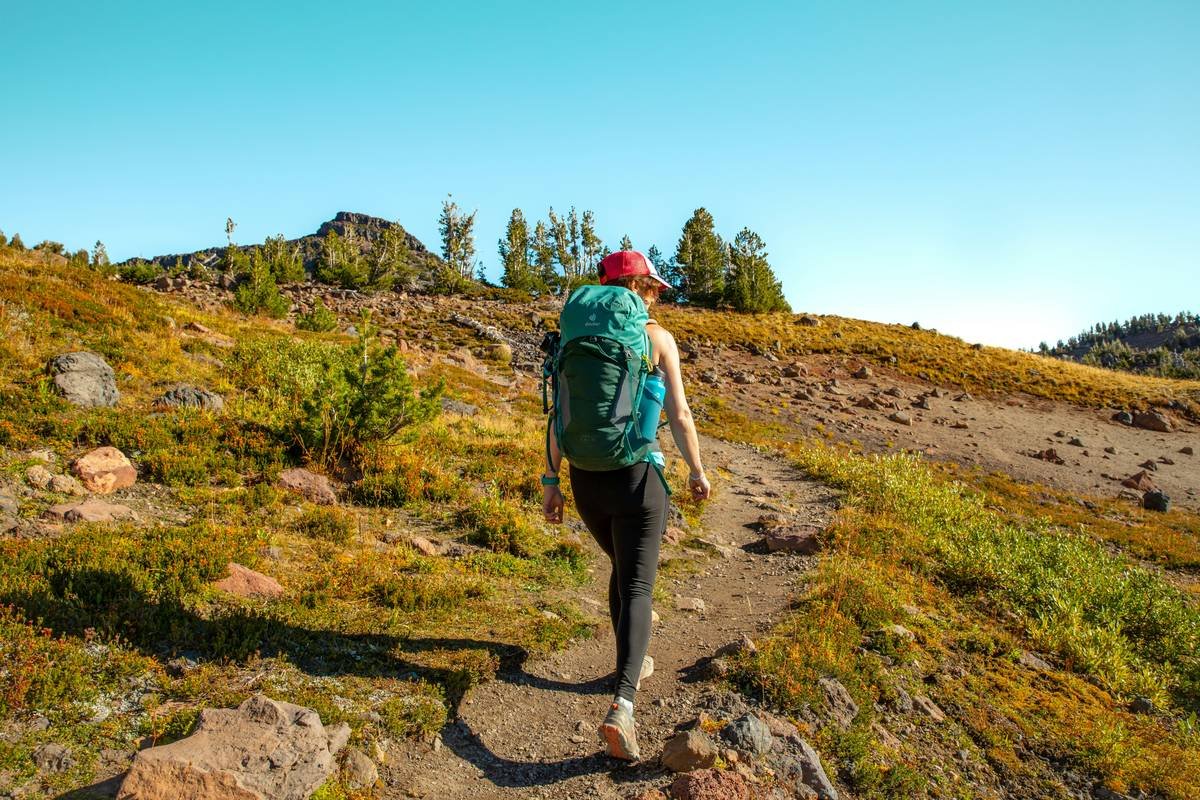
Adding 10–15 lbs via a hydration pack ups calorie burn by ~20%. But skip ankle weights—they wreck knee alignment. Your pack should sit snug on hips, not shoulders.
Step 3: Time It Right (Hint: Not After Brunch)
Hike in a fasted state (water + electrolytes only) for 45–60 mins to maximize fat oxidation. Or, wait 90 mins post-meal to avoid side stitches. Never hike immediately after eating—trust me, I once projectile-vomited trail mix near a marmot colony. Don’t be like me.
Step 4: Post-Hike Protein Window = Non-Negotiable
Muscle repair begins within 45 mins post-hike. Grab 20–30g protein (e.g., whey shake or Greek yogurt) to preserve lean mass—critical for long-term metabolism.
5 Proven Hiking Habits That Accelerate Fat Loss
- Hike Uphill Forward, Downhill Backward (Seriously): Builds glutes/hamstrings while sparing knees. Try 30-second intervals on gentle descents.
- Pace Like a Predator: Maintain brisk pace (3.5+ mph). If you can sing, you’re slacking.
- Hydrate with Electrolytes: Dehydration slows metabolism. Add LMNT or Nuun to water—no sugary sports drinks.
- Weekend Warrior? Double Up: Two 90-min hikes > four 30-min walks for mitochondrial biogenesis (fancy term for better fat-burning cells).
- Track Recovery Metrics: Use WHOOP or Garmin to monitor HRV. Low HRV = skip intense trails that day.
Terrible Tip Disclaimer: “Just hike every day!” Nope. Overuse injuries (plantar fasciitis, IT band syndrome) sabotage progress. Three quality hikes/week beats daily misery.
Rant Section: My Pet Peeve
Why do influencers film “hiking workouts” on perfectly paved urban paths wearing full glam makeup? That’s not hiking—that’s influencer cosplay. Real trails have mud, roots, and moments where you question your life choices. Embrace the grit. Your mitochondria will thank you.
Real Results: Sarah’s 12-Pound Trail Transformation
Sarah K., 42, tried everything: keto, spin classes, meal prepping like a prison warden. Stuck at 165 lbs for 18 months. Then she committed to a structured fitness trek boost:
- 3x/week hikes (avg. 4.2 miles, 500+ ft elevation)
- Pre-hike: black coffee + pinch of sea salt
- Post-hike: 25g protein within 40 mins
- No weekend “recovery beers”—switched to kombucha
In 10 weeks? Down 12 lbs, 3-inch waist reduction, and her resting heart rate dropped from 72 to 61 BPM. Her secret? “I stopped calling it ‘exercise.’ I call it ‘my soul refill.’ The weight fell off while I wasn’t looking.”
Fitness Trek Boost FAQs
Can beginners get a fitness trek boost?
Absolutely. Start with 1–2 mile loops with minimal elevation. Focus on consistency over intensity. Your first month is about building trail legs—not summiting peaks.
Do I need special shoes?
Yes—trail runners or hiking boots with ankle support and grippy outsoles (Vibram soles ideal). Sneakers slip on wet rocks = sprained ankles. Worth the $120 investment.
How does hiking compare to running for weight loss?
Hiking has lower injury risk and higher adherence long-term (ACSM, 2020). While running burns more calories/minute, hikers often log longer durations—netting similar weekly deficits with less joint stress.
What if I live in a flat area?
Use stadium stairs, parking garages, or set your treadmill to 8–10% incline. Simulate elevation. Better than nothing.
Does weather affect fat burn?
Cooler temps (50–60°F) slightly increase calorie expenditure as your body works to maintain core temp. Avoid extreme heat—dehydration halts fat metabolism.
Conclusion
A fitness trek boost isn’t just another workout trend—it’s nature’s original HIIT session wrapped in pine-scented therapy. By leveraging elevation, mindful pacing, and strategic recovery, hiking becomes a sustainable fat-loss engine that doesn’t feel like work. Skip the fluorescent gym lights. Find a trail. Let your quads scream up switchbacks while your mind unwinds. The scale will follow.
Like a Tamagotchi, your metabolism needs daily care—except instead of pixels, you’re feeding it dirt paths and summit views.
Pine needles crunch,
Quads burn, lungs fill with clean air—
Ten pounds vanish.