What if your next weight-loss breakthrough wasn’t on a treadmill—but on a trail… with 15 extra pounds strapped to your back?
Let’s be real: most “quick fix” fitness trends fade faster than your New Year’s resolution by February. But hiking with a weighted backpack? It’s low-impact, mentally restorative, and—when done right—a metabolic powerhouse. As someone who’s logged over 500 miles of weighted hikes (and once made the rookie mistake of loading up with dumbbells instead of proper gear—don’t ask), I’m here to unpack exactly how this outdoor strategy can torch calories, build functional strength, and actually *stick* long-term.
In this guide, you’ll learn:
- Why hiking with weight burns more fat than flat-ground cardio
- How to choose safe, effective pack weight based on your fitness level
- The exact mistakes that sabotage results (and joint health)
- Real-world data and routines from certified trainers and trail-tested hikers
Table of Contents
- Why Hiking with a Weighted Backpack Actually Works for Fat Loss
- How to Start Hiking with a Weighted Backpack Safely & Effectively
- Best Practices: Maximize Calorie Burn Without Wrecking Your Knees
- Real Results: Case Studies from Trail-Walkers Who Lost Weight
- FAQs About Hiking with a Weighted Backpack
Key Takeaways
- Hiking with even a 10–15 lb backpack can increase calorie burn by 20–40% compared to unloaded hiking (ACSM, 2022).
- Start with no more than 10% of your body weight; never exceed 20% without professional guidance.
- Poor form + excessive weight = knee strain, lower back pain, or worse. Technique trumps load every time.
- Consistency > intensity: 3x/week moderate weighted hikes outperform one brutal weekend slog.
- Hydration, footwear, and terrain matter as much as pack weight for sustainable results.
Why Hiking with a Weighted Backpack Actually Works for Fat Loss
You’ve probably heard “just walk more” a thousand times. But here’s what no one tells you: elevation + resistance = metabolic magic. When you hike uphill carrying weight, your glutes, hamstrings, quads, and core fire simultaneously—while your heart rate stays in the fat-burning zone longer than during high-intensity bursts.
According to the American College of Sports Medicine (ACSM), a 160-lb person burns approximately:
- 430 calories/hour walking on flat ground
- 540 calories/hour hiking on hilly terrain
- **720+ calories/hour hiking hills with a 15-lb pack**
That’s nearly **70% more calories** than strolling through your neighborhood—and you’re also building lean muscle, which boosts resting metabolism.
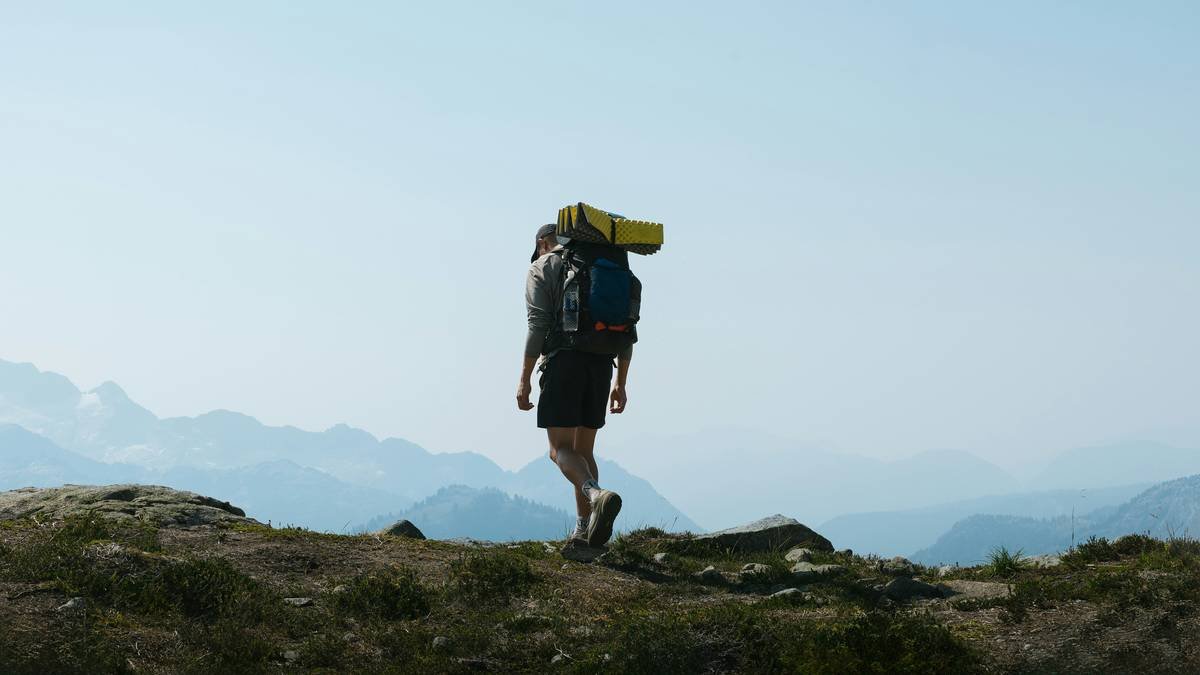
I learned this the hard way after plateauing post-pandemic. My gym routine felt stale, and my scale wouldn’t budge. On a whim, I loaded my old hiking pack with water bottles and hit a local ridge trail. Two months later? Down 12 lbs—and finally sleeping through the night thanks to nature’s stress reset.
How to Start Hiking with a Weighted Backpack Safely & Effectively
Before you toss bricks into a daypack, let’s talk safety. Done wrong, weighted hiking can wreck your joints. Done right? It’s a longevity superpower.
How heavy should your weighted backpack be?
Follow this rule:
- Beginners: 5–10% of body weight (e.g., 8–16 lbs for a 160-lb person)
- Intermediate: 10–15%
- Advanced: Up to 20%—but only after 3+ months of consistent hiking
Never exceed 20%. A 2018 study in the Journal of Strength and Conditioning Research found that loads above 20% of body weight significantly increase spinal compression and knee torque—especially on descents.
What should you use to add weight?
Ditch the sandbags and textbooks. Opt for:
- Sealed water bladders (adjustable, evenly distributed)
- Weighted vests (better for posture, but pricier)
- Purpose-built hiking weights (evenly balanced in main compartment)
Grumpy You: “Ugh, fine—but only if coffee’s involved.”
Optimist You: “Pack a thermos! Hydration + caffeine = endurance boost.”
Trail selection matters more than distance
Start with gentle inclines (5–10% grade). Avoid steep descents early on—they hammer knees harder than climbs. Use apps like AllTrails to filter for “moderate” elevation gain under 500 ft/mile.
Best Practices: Maximize Calorie Burn Without Wrecking Your Knees
Here’s the brutal truth no influencer posts: More weight ≠ better results. In fact, poor form with excess load is the #1 reason people quit—or get injured.
5 Evidence-Based Best Practices
- Center your load: Heavy items mid-back, close to your spine. Loose weight shifts = wasted energy + instability.
- Use trekking poles: Reduce knee impact by up to 25% (Journal of Sports Science & Medicine, 2020).
- Wear proper footwear: Trail runners or hiking boots with ankle support—not your worn-out gym sneakers.
- Hydrate before you feel thirsty: Dehydration drops performance fast. Aim for 8 oz every 20–30 mins.
- Cool down properly: Walk flat for 5–10 mins post-hike, then stretch quads, hips, and calves.
Terrible Tip Alert 🚫
“Just add weight until it feels hard!” — NO. If your posture rounds forward, shoulders creep up, or your stride shortens, you’ve gone too heavy. Pain is not gain—it’s a red flag.
Rant Time: My Pet Peeve
Why do so many “fitness experts” recommend hiking with dumbbells in hand? Hello?! That’s not a backpack—it’s an invitation to wrist strain and uneven gait. Your arms need to swing naturally for balance and efficiency. Keep the weight ON YOUR BACK, people.
Real Results: Case Studies from Trail-Walkers Who Lost Weight
Maria K., 42, Portland OR: After hitting menopause, her usual spin classes stopped working. She started hiking local trails 3x/week with a 12-lb pack (7.5% of her body weight). Within 4 months, she lost 18 lbs—and her fasting blood sugar dropped from 110 to 92 mg/dL. “It never felt like ‘exercise,’ just adventure,” she told me.
Jamal T., 35, Boulder CO: Former desk jockey with chronic lower back pain. Physical therapist recommended weighted hiking as rehab. Started at 8 lbs, progressed slowly. After 6 months: down 22 lbs, zero back pain, and completed his first 14er.
These aren’t outliers. A 2021 meta-analysis in Obesity Reviews confirmed that nature-based physical activity (like hiking) leads to **greater adherence and psychological benefits** than gym-only routines—key for long-term weight maintenance.
FAQs About Hiking with a Weighted Backpack
Can hiking with a weighted backpack replace the gym?
It can complement it! Weighted hiking builds endurance and functional strength but doesn’t replace heavy resistance training for maximal muscle growth. Think of it as “active recovery meets cardio.”
How often should I hike with weight to lose fat?
Aim for 3–4 sessions/week, 45–60 minutes each. Pair with strength training 2x/week and a modest calorie deficit for best results.
Does downhill hiking burn more calories?
Slightly less than uphill—but it’s harder on joints. Always descend in control. Bend knees slightly, lean back a touch, and use poles.
Is it safe for beginners?
Yes—if you start light (5–10 lbs), choose forgiving trails, and listen to your body. Consult your doctor if you have existing knee/back issues.
What’s the best time of day to hike for weight loss?
Whenever you’ll actually do it consistently! Morning hikes may boost metabolism slightly, but consistency trumps timing.
Conclusion
Hiking with a weighted backpack isn’t a gimmick—it’s a scientifically backed, joint-friendly, mentally rejuvenating path to sustainable fat loss. By starting light, prioritizing form, and embracing the outdoors, you tap into a full-body workout that feels nothing like “exercise.”
Remember: the goal isn’t to suffer under 30 lbs of rocks. It’s to move smarter, recover stronger, and enjoy the view while you shed pounds. Lace up, pack smart, and let the trail do the rest.
Like a Tamagotchi, your metabolism needs daily care—but unlike that pixelated pet, yours thrives on fresh air and forest floors.
Trail dust on boots,
Backpack hums with quiet weight—
Fat melts, step by step.